Foliage
Mature foliage has overlapping scales; young shoots can have sharper, needle-like leaves. Look without rubbing or picking a branch.
Eastern Redcedar · Juniperus virginiana
Find a steady point within the shelter of a changing day.
01 · Meet the tree
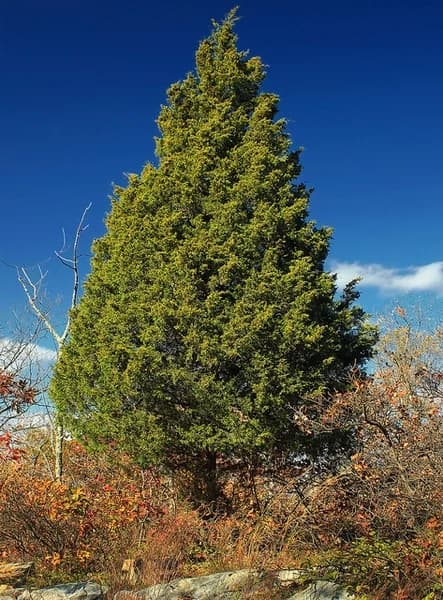
Eastern redcedar is a juniper, despite its common name. Meet the evergreen as an individual: its silhouette, its textured bark, and the spaces where birds might pause. Shelter can begin as careful attention to what supports life around you.
Mature foliage has overlapping scales; young shoots can have sharper, needle-like leaves. Look without rubbing or picking a branch.
Reddish-brown bark peels in narrow fibrous strips. Female trees bear small blue, berry-like seed cones. These are cones rather than true berries; leave them for wildlife.
Native across much of eastern and central North America, this evergreen grows on varied sites. Distinguish it from arborvitae and other junipers using several features, not the name cedar alone.
Compare several features, and notice how age and season change their appearance. These photographs are starting points for observation; leave living leaves, needles, cones, and bark attached.
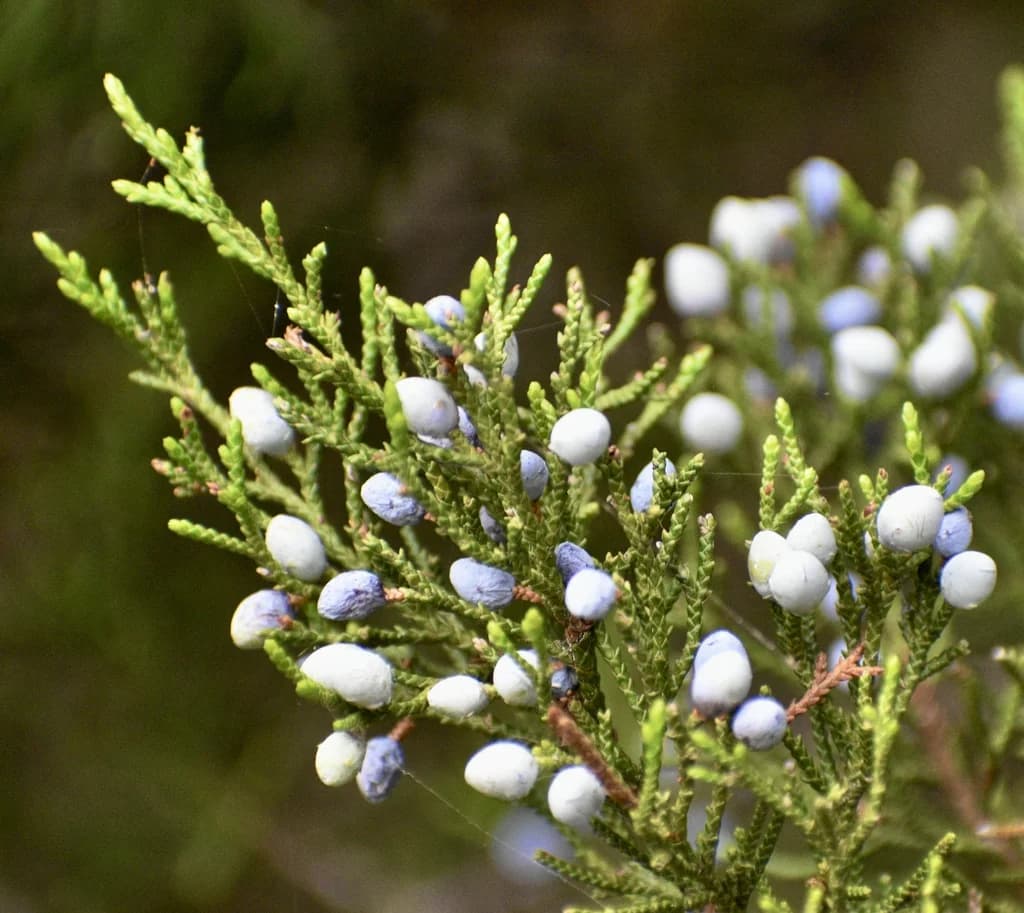
Green foliage persists through winter and can take on bronze tones. Spring brings pollen cones; blue seed cones on female trees mature in autumn. Return to notice changing light and visiting birds without expecting every tree to carry cones.
Botanical reference: NC State Extension’s eastern redcedar profile. This is a starting point for observation, not a complete identification key.
02 · Energy & character
Three qualities to contemplate beside the tree. Begin with what you can observe, then see what meaning emerges for you.
These tree-specific associations are new contemplative interpretations for the digital school. “Energy” here describes felt experience and symbolism; it is not a measured healing field or a promise of a particular effect.
Evergreen foliage remains visible as seasons change.
Consider a commitment that allows you to return without demanding identical days.
What can you return to gently?
Branches make a layered place for wildlife.
Notice what makes a place supportive for you, while leaving room for the lives already there.
What helps you feel supported?
A tree stands within a network of nearby plants and animals.
Let its surroundings prompt one ordinary act of care rather than a demand to do everything.
Who or what could use a little care?
03 · Practice with this tree · About 5 minutes
An original five-minute observation practice. Read once, then give your attention to the tree; sitting, standing, or observing from a distance are equally welcome.
Open outdoor practice →Sit or stand with your usual supports on stable, permitted ground, clear of damaged branches. Keep foliage untouched; observing at a distance is welcome.
Choose one patch of foliage or bark. Let your breathing stay natural while you return to that detail whenever attention wanders.
Widen your view to the spaces between branches. Listen to the surroundings without approaching nests or trying to attract wildlife.
Name one support already present in your life and one small way to care for it. Return to the whole scene and finish at your own pace.
Spend about five minutes, or less if that suits you. Keep your device available when needed. No touching, collecting, controlled breathing, or tree-supported movement is required; leave the tree and its surroundings undisturbed.
04 · Roots in the book
The book teaches attention and learning from trees. This page adds a species-specific encounter; it does not claim that the original book assigned these three energies to eastern redcedar.
Chapter 3 introduces three pathways and choosing an appropriate setting.
Read the chapter companionOriginal: printed pp. 13–17Chapter 4 encourages a sustainable beginning with five or ten minutes.
Read the chapter companionOriginal: printed p. 28Presence, perseverance, and connection connect this new practice with Chapter 6’s invitations to learn from trees.
Explore Wisdom and WonderOriginal: Chapter 6, printed pp. 96–12405 · Notice for yourself
Reflect quietly or write a sentence in your own notebook. On another visit, look at the same detail again. Your experience may fit these themes, suggest something different, or simply be a few minutes of looking.