Leaves
Rounded leaves on flattened stalks can tremble in a slight breeze. Still air may leave them quiet; movement is not guaranteed.
Quaking aspen · Populus tremuloides
Watch what moves. Notice how you respond, with curiosity and room to choose.
01 · Meet the tree
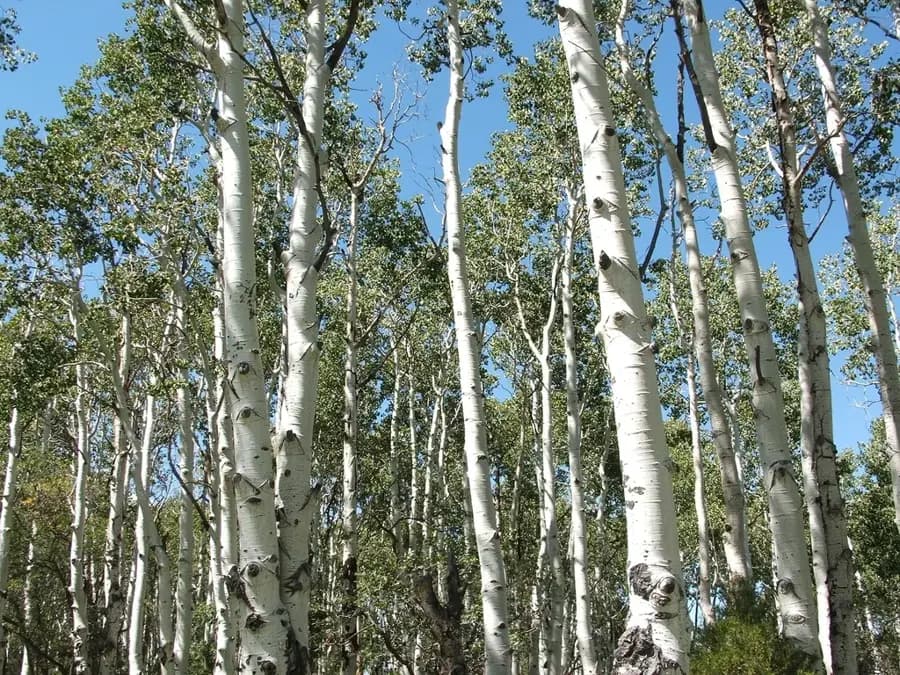
Watch what moves. Notice how you respond, with curiosity and room to choose. Begin with this individual tree: its form, its setting, and what you can observe today. Let the encounter come before the meaning.
Rounded leaves on flattened stalks can tremble in a slight breeze. Still air may leave them quiet; movement is not guaranteed.
Young trunks often have pale bark, becoming darker and more furrowed near the base with age. Look beyond bark color when identifying a tree.
Quaking aspen grows widely in cool North American regions. It can produce new stems from roots, so some neighboring trunks belong to a connected clone.
Compare several features, and notice how age and season change their appearance. These photographs are starting points for observation; leave living leaves, needles, cones, and bark attached.
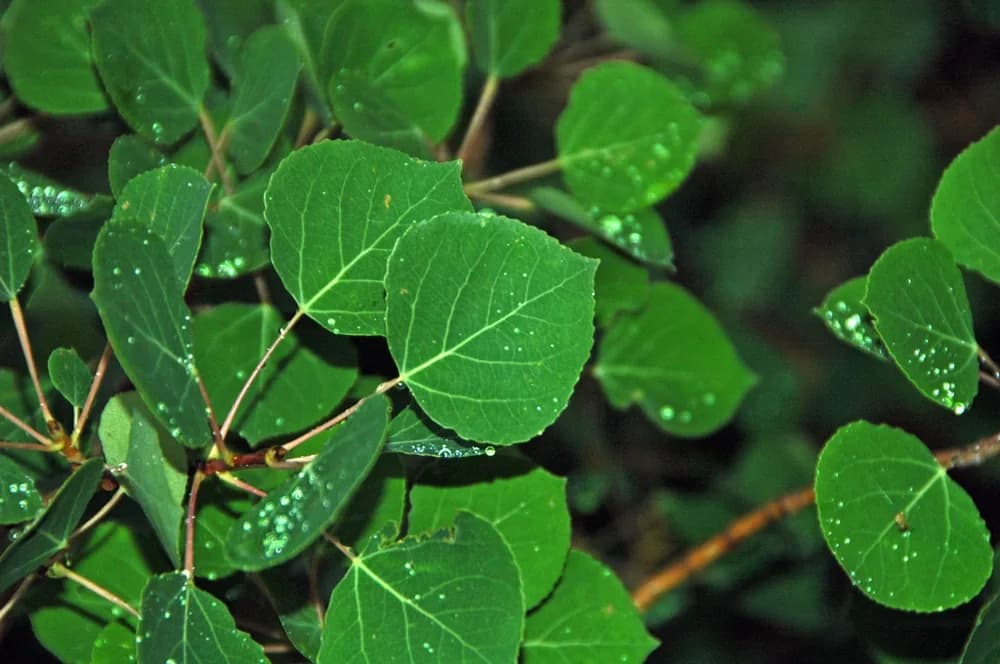
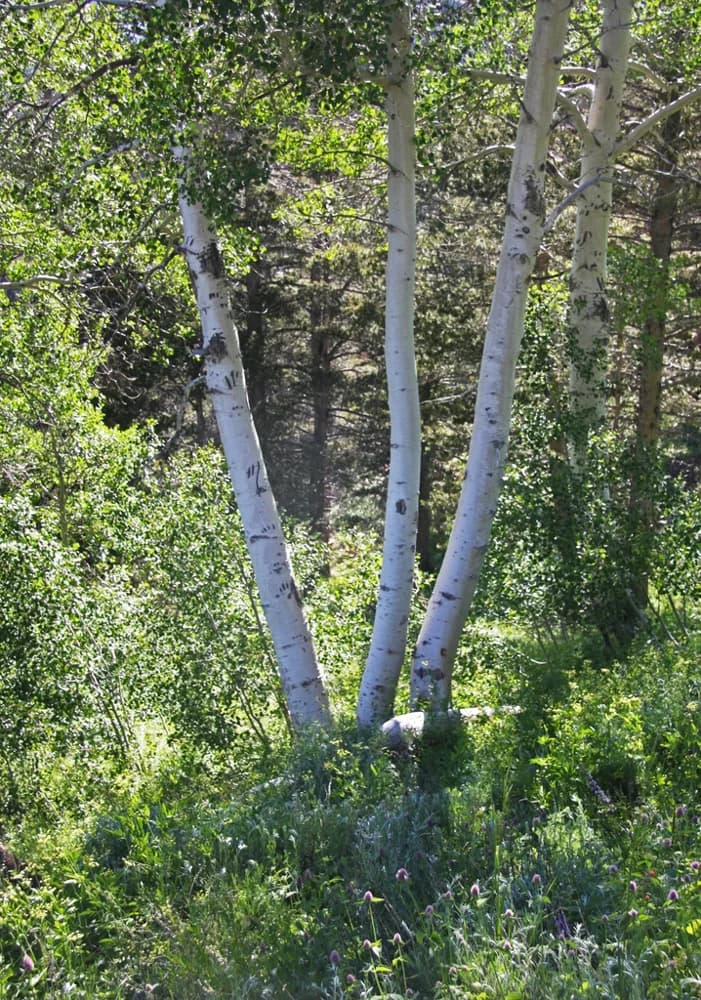
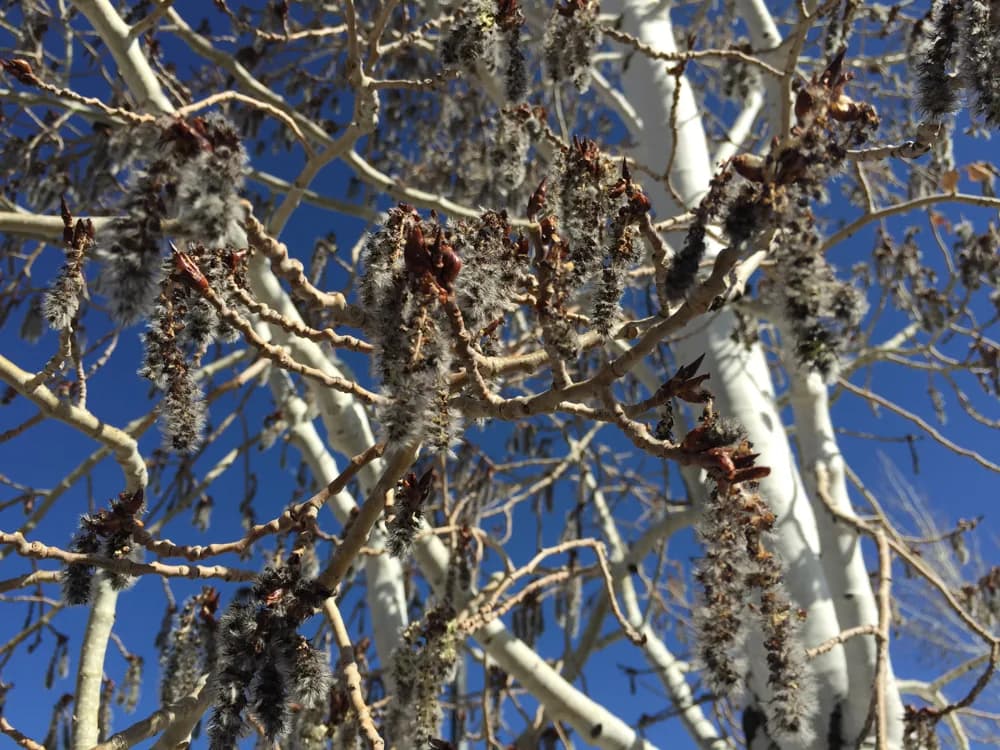
Look for unfolding leaves, summer movement, and yellow autumn foliage. Bare winter branches reveal another kind of pattern. Connected trunks are not always obvious from the surface.
Botanical reference: NC State Extension’s quaking aspen profile. This is a starting point for observation, not a complete identification key.
02 · Energy & character
Three qualities to contemplate beside the tree. Begin with what you can observe, then see what meaning emerges for you.
These tree-specific associations are new contemplative interpretations for the digital school. “Energy” here describes felt experience and symbolism; it is not a measured healing field or a promise of a particular effect.
Flattened leaf stalks allow leaves to move readily in wind.
Sensitivity can be information. Notice a response before deciding how to act on it.
What are you noticing in yourself?
Some groups of aspen stems grow from shared roots.
Use this as a prompt to consider support beyond what is immediately visible. Do not assume every nearby tree shares roots.
What connections sustain you?
Leaf movement changes as the breeze changes.
Reflect on the space between receiving a signal and choosing a response.
What response would fit this moment?
03 · Practice with this tree · About 5 minutes
A new observation practice exploring sensitivity, connection, responsiveness beside quaking aspen. Read once, then spend a few minutes with the tree.
Open outdoor practice →Watch leaves from a stable seat or path. If there is no breeze or no foliage, choose shifting light or the branching pattern instead.
Notice where your attention moves and whether thoughts or feelings arise. You do not need to interpret them immediately.
Include neighboring trunks and the ground around them. Let the scene prompt reflection on connections in your own life.
Think of one situation that invites a response. Give yourself a moment, then choose one small action or a useful pause.
Spend about five minutes, or less if that suits you. Keep your device available when needed. No touching, collecting, controlled breathing, or tree-supported movement is required; leave the tree and its surroundings undisturbed.
04 · Roots in the book
The book teaches attention and learning from trees. This page adds a species-specific encounter; it does not claim that the original book assigned these three energies to aspen.
Chapter 3 introduces three pathways and choosing an appropriate setting.
Read the chapter companionOriginal: printed pp. 13–17Chapter 4 encourages a sustainable beginning with five or ten minutes.
Read the chapter companionOriginal: printed p. 28Adaptability, presence, and balance and optimization connect this new practice with Chapter 6’s invitations to learn from trees.
Explore Wisdom and WonderOriginal: Chapter 6, printed pp. 96–12405 · Notice for yourself
Reflect quietly or write a sentence in your own notebook. On another visit, look at the same detail again. Your experience may fit these themes, suggest something different, or simply be a few minutes of looking.