Bark
American beech has light gray bark that remains smooth as it ages. Observe without carving, marking, or removing anything.
American beech · Fagus grandifolia
Stay with the ordinary detail. Let a few minutes of looking be enough.
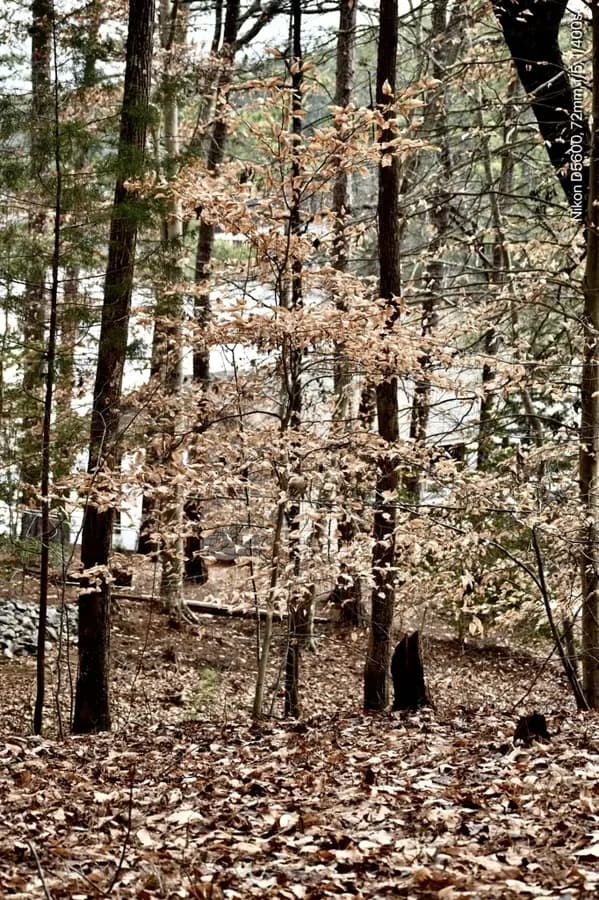
01 · Meet the tree
Stay with the ordinary detail. Let a few minutes of looking be enough. Begin with this individual tree: its form, its setting, and what you can observe today. Let the encounter come before the meaning.
American beech has light gray bark that remains smooth as it ages. Observe without carving, marking, or removing anything.
Leaves have prominent veins and toothed edges. Some dry bronze leaves may remain attached into winter.
Native to eastern North America, American beech can form groves through shoots arising from its roots. Notice surface roots without walking over them.
Compare several features, and notice how age and season change their appearance. These photographs are starting points for observation; leave living leaves, needles, cones, and bark attached.
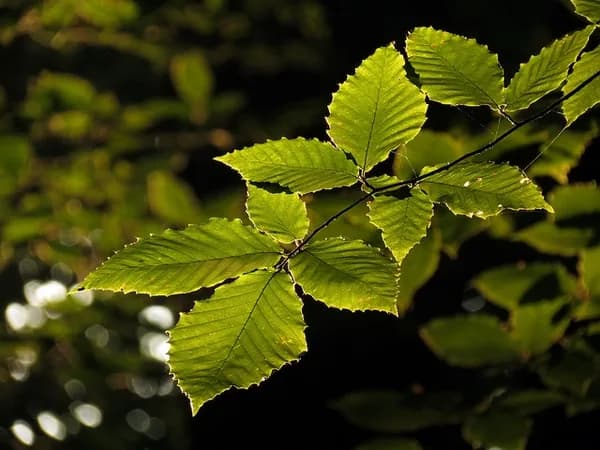
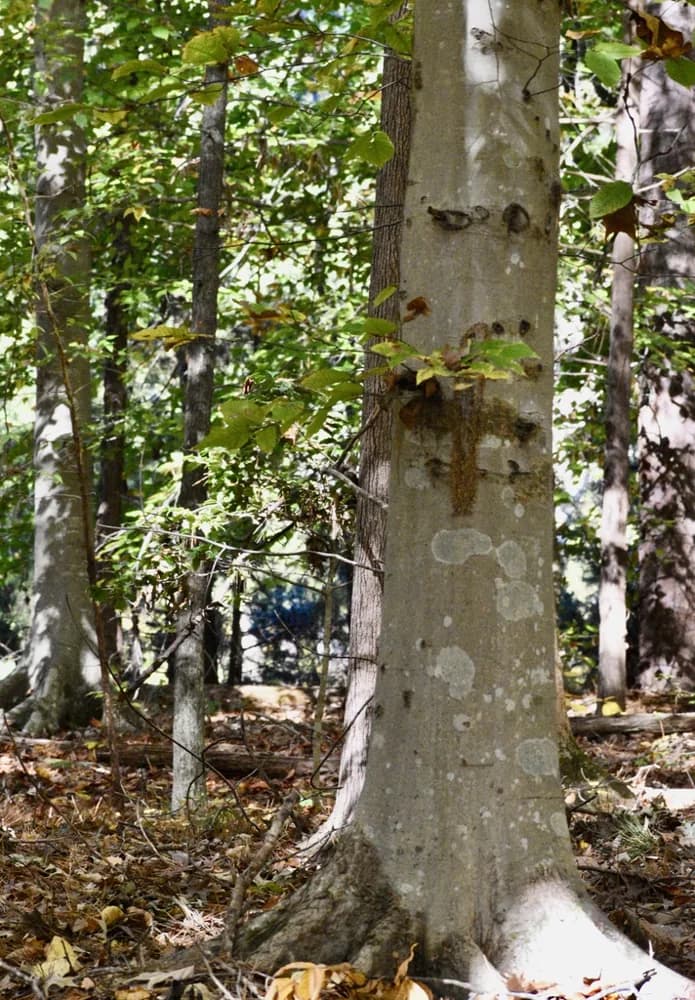
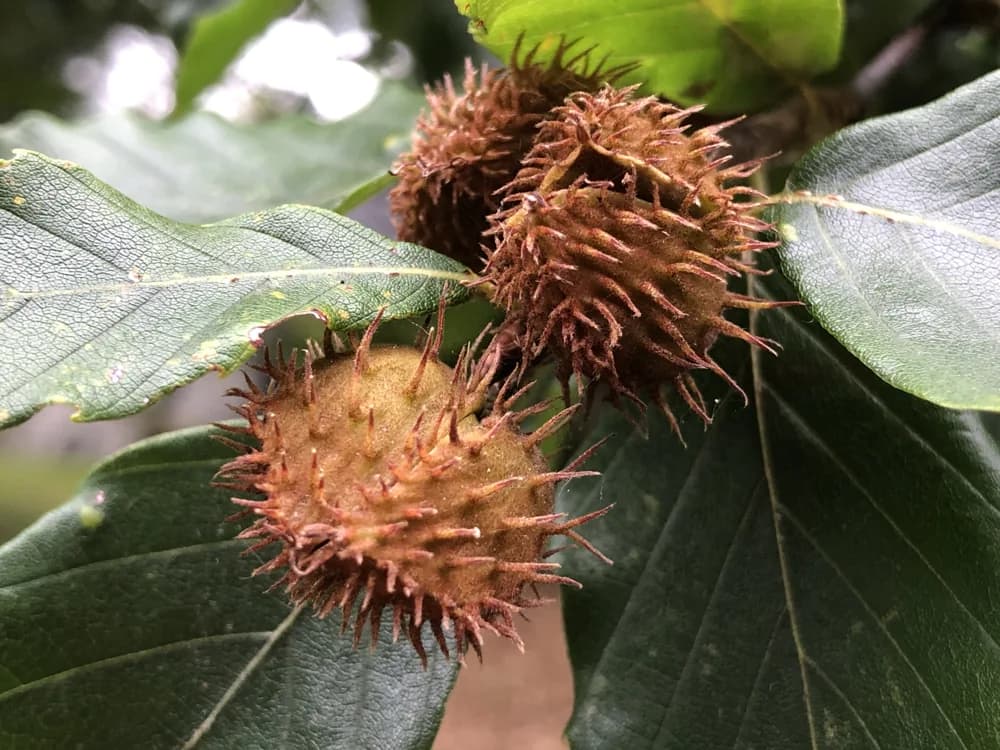
Watch leaves emerge, deepen in summer, and turn golden bronze. Winter may hold dry leaves as well as bare twigs. The smooth trunk offers a familiar detail to revisit through changing light.
Botanical reference: NC State Extension’s american beech profile. This is a starting point for observation, not a complete identification key.
02 · Energy & character
Three qualities to contemplate beside the tree. Begin with what you can observe, then see what meaning emerges for you.
These tree-specific associations are new contemplative interpretations for the digital school. “Energy” here describes felt experience and symbolism; it is not a measured healing field or a promise of a particular effect.
A smooth trunk makes subtle light and shadow visible.
Stay with what is here before seeking something more dramatic.
What is here when you stop searching?
The trunk’s form can be clear without bright color.
Consider a way to be present without needing to make an impression.
Where can you be quietly yourself?
One patch of bark contains small changes of tone and texture.
Give a simple detail your full attention. Enough can be smaller than you expected.
What would be enough today?
03 · Practice with this tree · About 5 minutes
A new observation practice exploring presence, quiet confidence, simplicity beside american beech. Read once, then spend a few minutes with the tree.
Open outdoor practice →Choose a comfortable view of a beech trunk or branch. Stay on a permitted surface and leave roots and bark undisturbed.
For a short while, notice light, color, lines, and shadow. Let explanations wait.
When you start searching for a special experience, return to your chosen detail. A quiet or uneventful visit still counts.
Finish by naming one thing you noticed. Ask what you could simplify in the next part of your day.
Spend about five minutes, or less if that suits you. Keep your device available when needed. No touching, collecting, controlled breathing, or tree-supported movement is required; leave the tree and its surroundings undisturbed.
04 · Roots in the book
The book teaches attention and learning from trees. This page adds a species-specific encounter; it does not claim that the original book assigned these three energies to beech.
Chapter 3 introduces three pathways and choosing an appropriate setting.
Read the chapter companionOriginal: printed pp. 13–17Chapter 4 encourages a sustainable beginning with five or ten minutes.
Read the chapter companionOriginal: printed p. 28Presence, acceptance, and one-pointed focus connect this new practice with Chapter 6’s invitations to learn from trees.
Explore Wisdom and WonderOriginal: Chapter 6, printed pp. 96–12405 · Notice for yourself
Reflect quietly or write a sentence in your own notebook. On another visit, look at the same detail again. Your experience may fit these themes, suggest something different, or simply be a few minutes of looking.