Bark
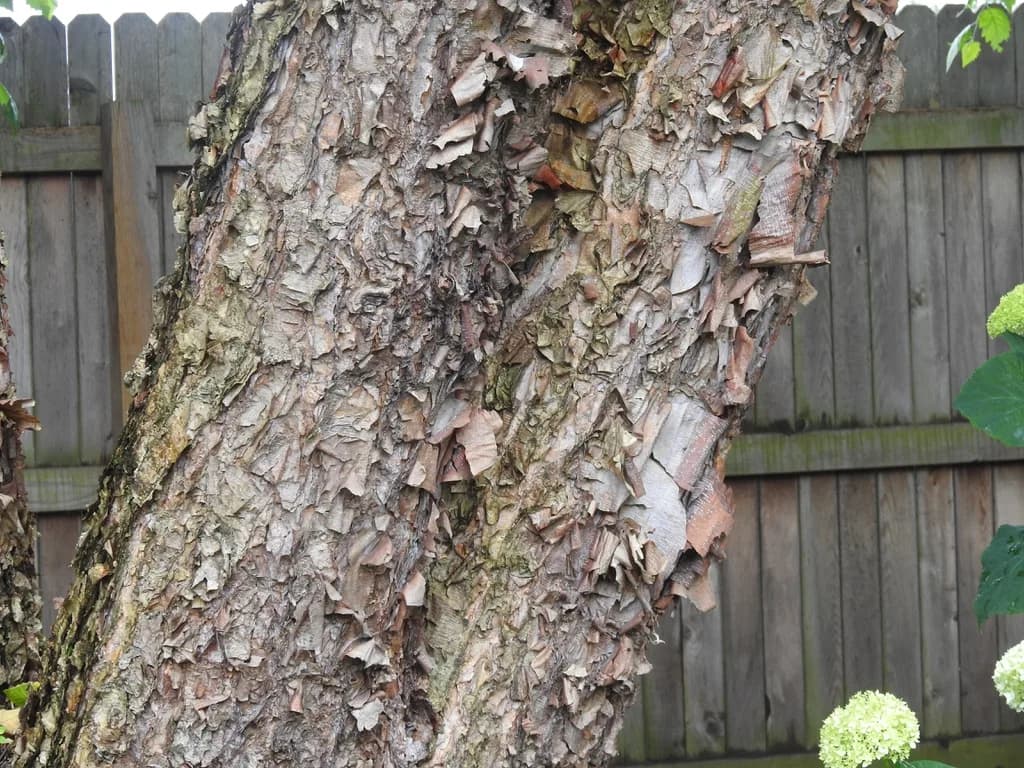
Salmon, cinnamon, and brown tones appear in peeling bark layers. Older trunks can become darker and ridged. Leave peeling bark attached; color and texture vary with age and cultivar.
River birch · Betula nigra
Follow a changing surface. Make room for one useful adjustment.
01 · Meet the tree
Light catches the bark differently from one moment to the next. Let the tree before you be a place to notice change without needing to make anything happen.
Salmon, cinnamon, and brown tones appear in peeling bark layers. Older trunks can become darker and ridged. Leave peeling bark attached; color and texture vary with age and cultivar.
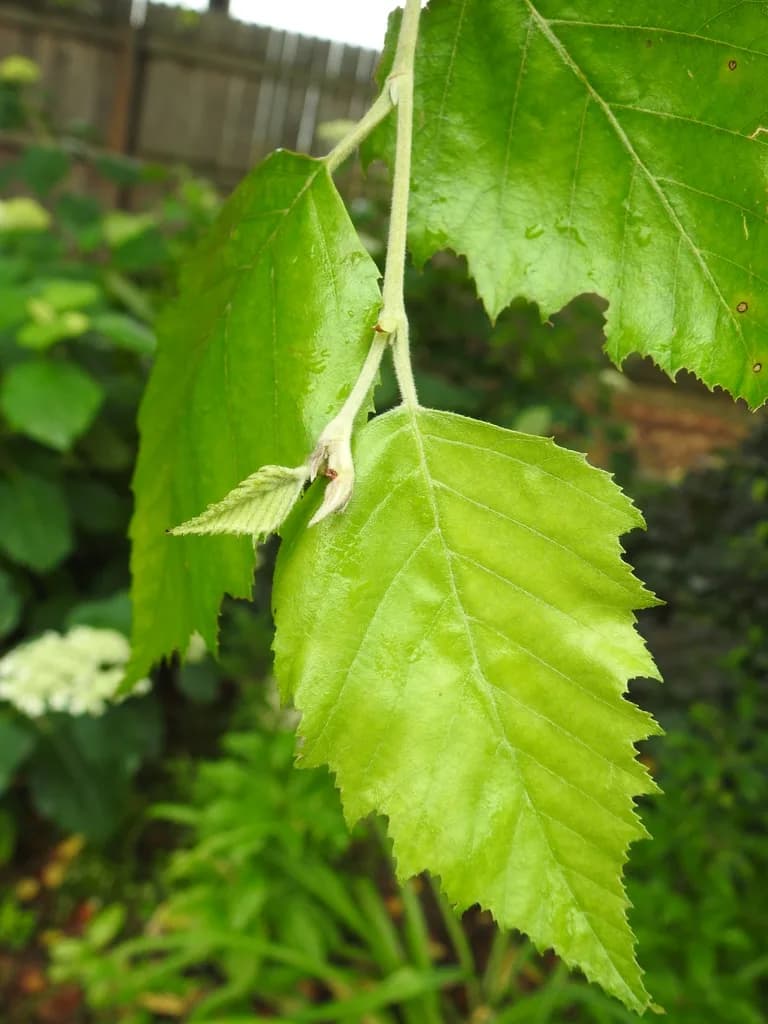
Simple, alternate leaves are roughly diamond-shaped to oval, with pointed tips and doubly toothed edges. Use leaves, bark, and setting together when distinguishing birches.
Native to the central and eastern United States, river birch grows along waterways and floodplains and is also planted in landscapes. It tolerates wet conditions and more heat than many other birches.
Compare several features, and notice how age and season change their appearance. These photographs are starting points for observation; leave living leaves, needles, cones, and bark attached.
Spring brings catkins and new leaves, followed by small seeds in late spring or early summer. Leaves may yellow in autumn; bark remains visible through winter. Dry summer conditions can cause some leaves to fall early.
Botanical reference: NC State Extension’s river birch profile. This is a starting point for observation, not a complete identification key.
02 · Energy & character
Three qualities to contemplate beside the tree. Begin with what you can observe, then see what meaning emerges for you.
These tree-specific associations are new contemplative interpretations for the digital school. “Energy” here describes felt experience and symbolism; it is not a measured healing field or a promise of a particular effect.
Different patches of bark offer different colors and textures.
Use that variety as a prompt to consider more than one workable response. An adjustment can be small.
What could you adjust to meet today's conditions?
The tree's appearance shifts with light, weather, and season.
Give yourself time to notice what has changed before deciding how to respond.
What is different now from your last visit?
One visible edge offers a place to rest your attention.
Bring your attention to what is available here. You can meet this moment at your own pace.
What can you notice without trying to alter it?
03 · Practice with this tree · About 5 minutes
An original five-minute practice connecting close observation with a flexible response to change.
Open outdoor practice →Stay on a stable, permitted path away from steep or slippery banks. Sit or stand comfortably with your usual supports; a planted river birch works just as well.
Find two patches of bark or two parts of the canopy. Let your eyes move between them. Keep all bark and leaves attached.
Bring a recent change to mind. Notice your first response without needing to settle it. Keep breathing naturally and return your gaze to the tree whenever useful.
Choose one practical adjustment that fits your present circumstances. It might be a different pace, a request for help, or a little more time.
Spend about five minutes, or less if that suits you. Keep your device available when needed. No touching, collecting, controlled breathing, or tree-supported movement is required; leave the tree and its surroundings undisturbed.
04 · Roots in the book
The book teaches attention and learning from trees. This page adds a species-specific encounter; it does not claim that the original book assigned these three energies to river birch.
Chapter 3 introduces three pathways and choosing an appropriate setting.
Read the chapter companionOriginal: printed pp. 13–17Chapter 4 encourages a sustainable beginning with five or ten minutes.
Read the chapter companionOriginal: printed p. 28Acceptance, presence, and balance and optimization connect this new practice with Chapter 6’s invitations to learn from trees.
Explore Wisdom and WonderOriginal: Chapter 6, printed pp. 96–12405 · Notice for yourself
Reflect quietly or write a sentence in your own notebook. On another visit, look at the same detail again. Your experience may fit these themes, suggest something different, or simply be a few minutes of looking.