Leaves
Black willow has narrow, finely toothed leaves. This species is distinct from the ornamental weeping willow.
Black willow · Salix nigra
Make room for a different response. Explore a softer approach without losing your footing.
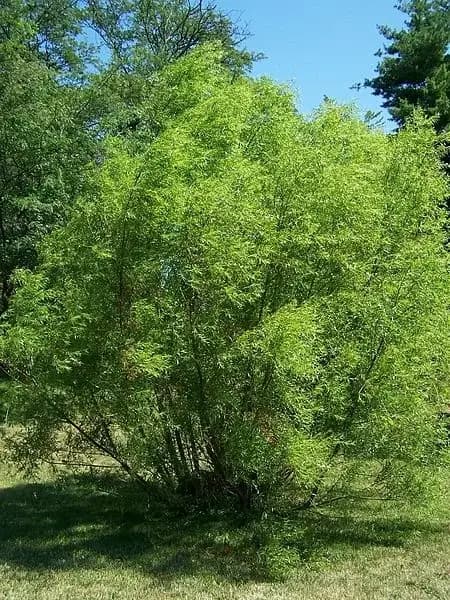
01 · Meet the tree
Make room for a different response. Explore a softer approach without losing your footing. Begin with this individual tree: its form, its setting, and what you can observe today. Let the encounter come before the meaning.
Black willow has narrow, finely toothed leaves. This species is distinct from the ornamental weeping willow.
Older bark becomes dark and deeply furrowed. The spreading crown can be irregular, supported by one or several curved trunks.
A native of moist habitats in eastern and central North America, black willow often grows near streams and floodplains. Observe from firm ground away from unstable banks.
Compare several features, and notice how age and season change their appearance. These photographs are starting points for observation; leave living leaves, needles, cones, and bark attached.
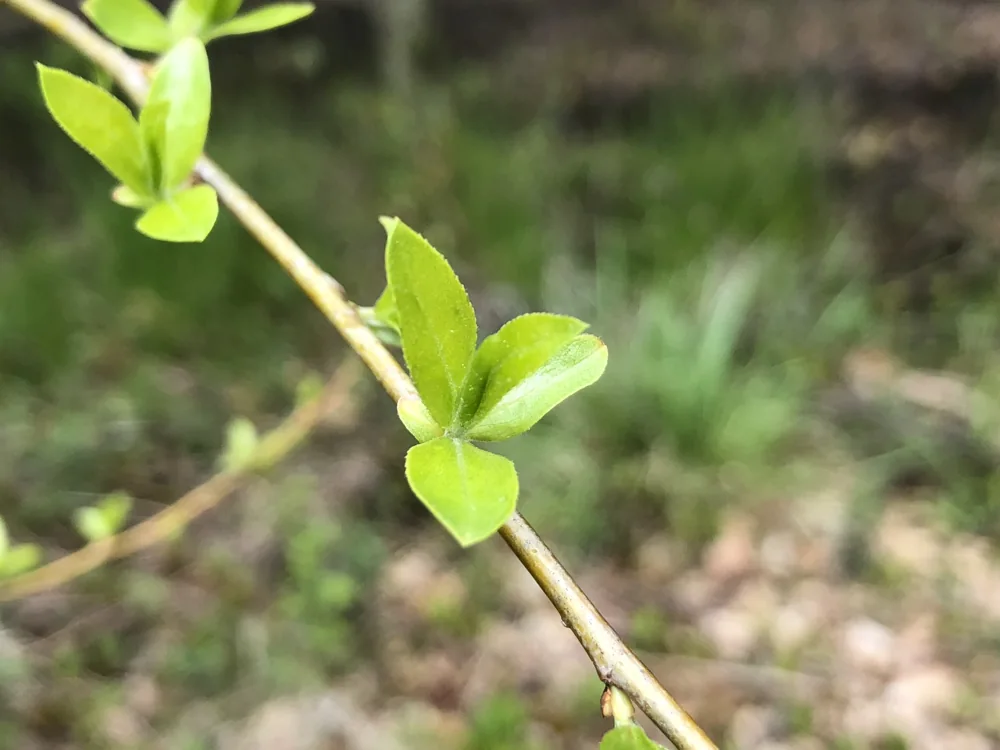
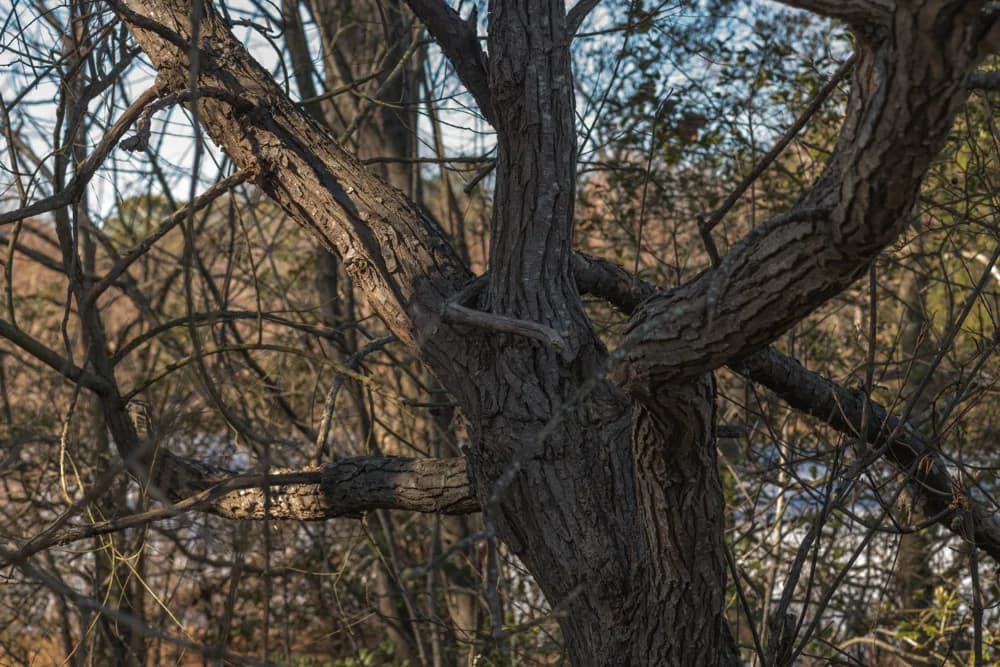
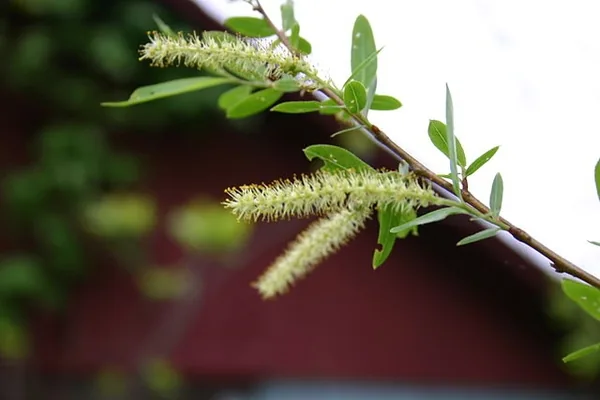
Look for spring catkins, summer foliage, and the open winter crown. Water levels and ground conditions may change between visits; choose a safe viewpoint each time.
Botanical reference: NC State Extension’s black willow profile. This is a starting point for observation, not a complete identification key.
02 · Energy & character
Three qualities to contemplate beside the tree. Begin with what you can observe, then see what meaning emerges for you.
These tree-specific associations are new contemplative interpretations for the digital school. “Energy” here describes felt experience and symbolism; it is not a measured healing field or a promise of a particular effect.
A crown can follow many irregular directions.
Allow a change of approach while keeping what matters in view. Flexibility includes respecting your limits.
Where could you adjust your approach?
A deciduous tree loses its leaves with the seasons.
Consider putting down one unnecessary demand for the length of this visit.
What can wait for a few minutes?
Black willow often grows beside moving water.
If water is visible, watch its changing surface from a safe distance. Let flow suggest the possibility of a next step.
What could move a little more freely?
03 · Practice with this tree · About 5 minutes
A new observation practice exploring flexibility, release, flow beside black willow. Read once, then spend a few minutes with the tree.
Open outdoor practice →Observe from a stable path or seat, away from water’s edge and hazardous branches. Black willow wood can break; keep a comfortable distance.
Trace one visible branch with your eyes. Let its direction be irregular without trying to correct it.
Check for unnecessary effort in your gaze or hands. If comfortable, allow a little less. Keep normal supports and natural breathing.
Bring to mind a situation that feels stuck. Ask whether one smaller or gentler approach is available. You do not need to solve it now.
Spend about five minutes, or less if that suits you. Keep your device available when needed. No touching, collecting, controlled breathing, or tree-supported movement is required; leave the tree and its surroundings undisturbed.
04 · Roots in the book
The book teaches attention and learning from trees. This page adds a species-specific encounter; it does not claim that the original book assigned these three energies to willow.
Chapter 3 introduces three pathways and choosing an appropriate setting.
Read the chapter companionOriginal: printed pp. 13–17Chapter 4 encourages a sustainable beginning with five or ten minutes.
Read the chapter companionOriginal: printed p. 28Adaptability, release, and balance and optimization connect this new practice with Chapter 6’s invitations to learn from trees.
Explore Wisdom and WonderOriginal: Chapter 6, printed pp. 96–12405 · Notice for yourself
Reflect quietly or write a sentence in your own notebook. On another visit, look at the same detail again. Your experience may fit these themes, suggest something different, or simply be a few minutes of looking.