Leaves
Large, simple, heart-shaped leaves provide a useful starting feature. Compare leaves with flowers and capsules; southern catalpa can look similar.
Northern Catalpa · Catalpa speciosa
Look at one broad leaf, then let your attention include the space around it.
01 · Meet the tree
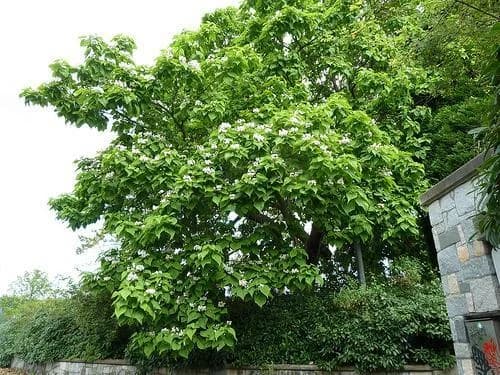
A northern catalpa can make an encounter feel expansive: large leaves, spreading branches, and long seed capsules each offer a different scale of attention. Begin with the tree you can see, allowing spaciousness to be an invitation rather than a feeling you must produce.
Large, simple, heart-shaped leaves provide a useful starting feature. Compare leaves with flowers and capsules; southern catalpa can look similar.
White trumpet-shaped flowers have yellow and purple markings. Long, slender capsules follow. Northern catalpa flowers have a cleft lower lobe; consult a regional key when separating the two catalpa species.
Native to central and eastern parts of the United States and widely planted, northern catalpa has brittle wood. Choose a view clear of damaged branches and loose capsules, especially after storms.
Late spring to early summer can bring flowers, followed by green capsules. Autumn leaves turn yellow and darken before falling. Long capsules may remain on bare branches into winter. Observe the season present rather than searching for every feature at once.
Botanical reference: NC State Extension’s northern catalpa profile. This is a starting point for observation, not a complete identification key.
02 · Energy & character
Three qualities to contemplate beside the tree. Begin with what you can observe, then see what meaning emerges for you.
These tree-specific associations are new contemplative interpretations for the digital school. “Energy” here describes felt experience and symbolism; it is not a measured healing field or a promise of a particular effect.
Large leaves and openings between branches offer contrasting shapes.
Let an opening prompt a little room around your next task. Space can be something you arrange.
Where could you leave a little room?
A broad crown makes shade and habitat.
Consider what you can offer sustainably, with attention to your own limits.
What can you offer without exhausting yourself?
The canopy offers a view that need not be completed.
Allow a few minutes without collecting information or reaching a conclusion.
What could you leave unfinished for now?
03 · Practice with this tree · About 5 minutes
An original five-minute observation practice. Read once, then give your attention to the tree; sitting, standing, or observing from a distance are equally welcome.
Open outdoor practice →Choose stable, permitted ground away from damaged limbs. Sit or stand comfortably; a distant view is enough.
Look at a leaf, flower cluster, or opening in the crown. If foliage is absent, choose a branch. Let your breath remain ordinary.
Move attention from your detail to the nearby open space, then back again. Keep your head comfortable rather than reaching upward.
Choose one small act of generosity and leave room for rest around it. Widen your attention before returning to your day.
Spend about five minutes, or less if that suits you. Keep your device available when needed. No touching, collecting, controlled breathing, or tree-supported movement is required; leave the tree and its surroundings undisturbed.
04 · Roots in the book
The book teaches attention and learning from trees. This page adds a species-specific encounter; it does not claim that the original book assigned these three energies to northern catalpa.
Chapter 3 introduces three pathways and choosing an appropriate setting.
Read the chapter companionOriginal: printed pp. 13–17Chapter 4 encourages a sustainable beginning with five or ten minutes.
Read the chapter companionOriginal: printed p. 28Balance and optimization, presence, and generosity connect this new practice with Chapter 6’s invitations to learn from trees.
Explore Wisdom and WonderOriginal: Chapter 6, printed pp. 96–12405 · Notice for yourself
Reflect quietly or write a sentence in your own notebook. On another visit, look at the same detail again. Your experience may fit these themes, suggest something different, or simply be a few minutes of looking.