Leaves
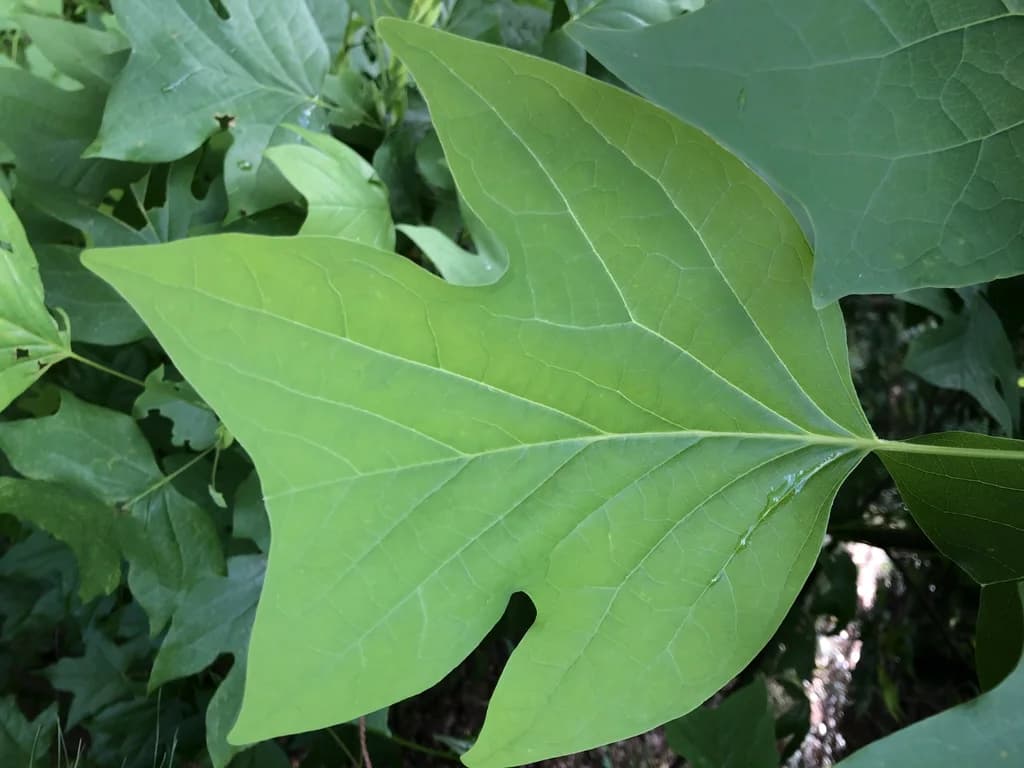
Alternate leaves have four main lobes and a broad, notched or flattened tip. Their distinctive outline is a useful clue; compare the twig and other features too.
Tulip tree · Liriodendron tulipifera
Let a small detail widen your perspective. Give your next intention room to grow.
01 · Meet the tree
Begin with what is within view: a leaf silhouette, a patch of light, or the shape of a branch. You do not need to see the whole crown to make a meaningful encounter. One clear observation can be enough.
Alternate leaves have four main lobes and a broad, notched or flattened tip. Their distinctive outline is a useful clue; compare the twig and other features too.
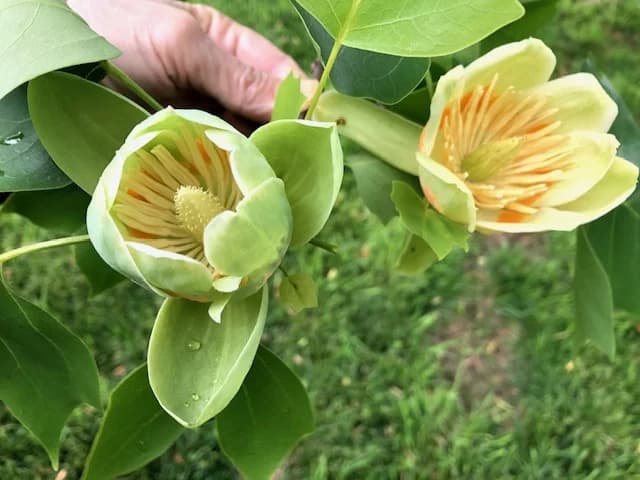
Greenish-yellow, cup-shaped flowers have orange markings. The cone-like fruit separates into winged seeds. Flowers may be high above a comfortable viewpoint.
Native to eastern North America, tulip tree belongs to the magnolia family. Despite the name tulip-poplar, it is not a true poplar. It often grows in moist, well-drained forest settings.
Compare several features, and notice how age and season change their appearance. These photographs are starting points for observation; leave living leaves, needles, cones, and bark attached.
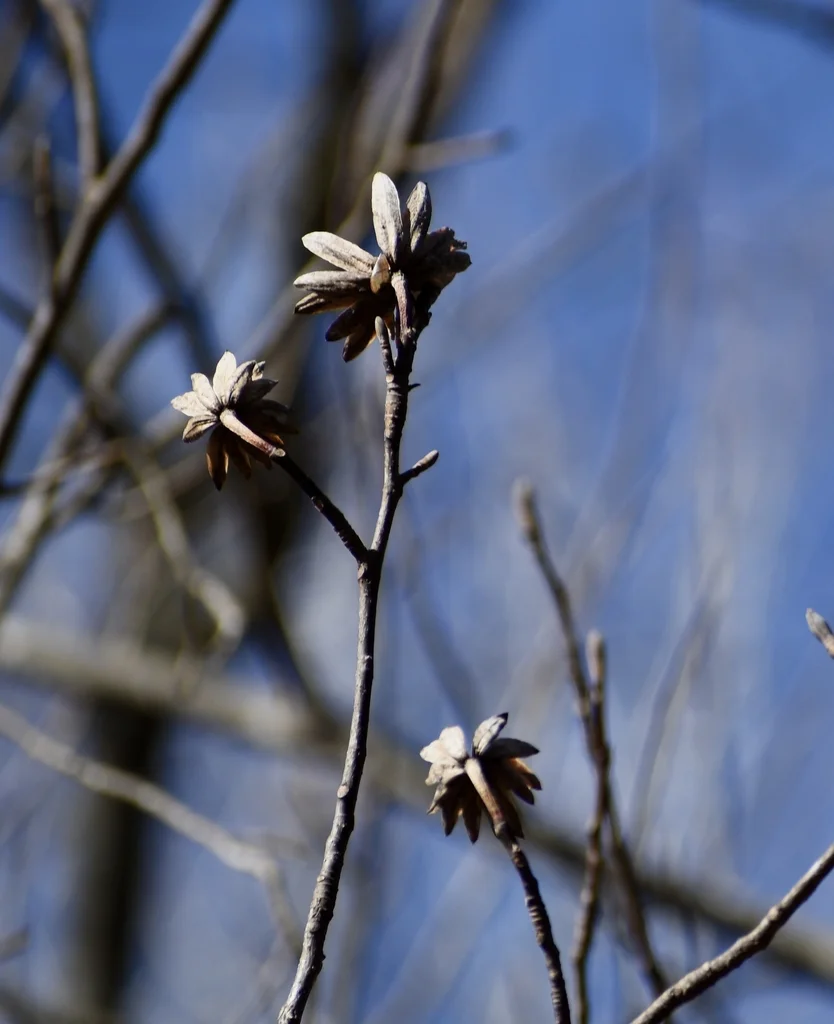
Watch leaves unfold in spring and look for flowers in late spring or early summer. Leaves often turn yellow in autumn. In winter, notice the outline of branches and any remaining fruit structures; timing varies by place.
Botanical reference: NC State Extension’s tulip tree profile. This is a starting point for observation, not a complete identification key.
02 · Energy & character
Three qualities to contemplate beside the tree. Begin with what you can observe, then see what meaning emerges for you.
These tree-specific associations are new contemplative interpretations for the digital school. “Energy” here describes felt experience and symbolism; it is not a measured healing field or a promise of a particular effect.
Follow a visible line from the trunk toward a branch.
Use that direction as an invitation to name something worth growing toward. An aspiration can remain simple and close to everyday life.
What would you like to give patient attention?
A leaf and a whole crown offer different scales of looking.
Move between one small action and the wider purpose it serves. Neither view needs to contain everything.
How does your next small step fit the larger picture?
Look for an outline you would find difficult to draw from memory.
Let surprise interrupt the assumption that you already know this tree. Curiosity can begin again on a familiar path.
What have you overlooked?
03 · Practice with this tree · About 5 minutes
A new five-minute observation practice connecting aspiration with attention. Read the steps, then return your eyes to the tree.
Open outdoor practice →Sit or stand on permitted, stable ground with your usual supports. Keep your neck comfortable and your gaze at an easy height.
Follow a visible leaf edge or branch with your eyes. If it is too distant, choose a closer detail. Leave leaves and flowers attached.
Include the surrounding light and neighboring plants. Let your breath continue naturally. Notice how the detail belongs to a larger scene.
Choose a modest action connected to something you care about. Finish when ready, carrying the intention with you.
Spend about five minutes, or less if that suits you. Keep your device available when needed. No touching, collecting, controlled breathing, or tree-supported movement is required; leave the tree and its surroundings undisturbed.
04 · Roots in the book
The book teaches attention and learning from trees. This page adds a species-specific encounter; it does not claim that the original book assigned these three energies to tulip tree.
Chapter 3 introduces three pathways and choosing an appropriate setting.
Read the chapter companionOriginal: printed pp. 13–17Chapter 4 encourages a sustainable beginning with five or ten minutes.
Read the chapter companionOriginal: printed p. 28One-pointed focus and aspiration for excellence, presence, and perseverance connect this new practice with Chapter 6’s invitations to learn from trees.
Explore Wisdom and WonderOriginal: Chapter 6, printed pp. 96–12405 · Notice for yourself
Reflect quietly or write a sentence in your own notebook. On another visit, look at the same detail again. Your experience may fit these themes, suggest something different, or simply be a few minutes of looking.