Leaves
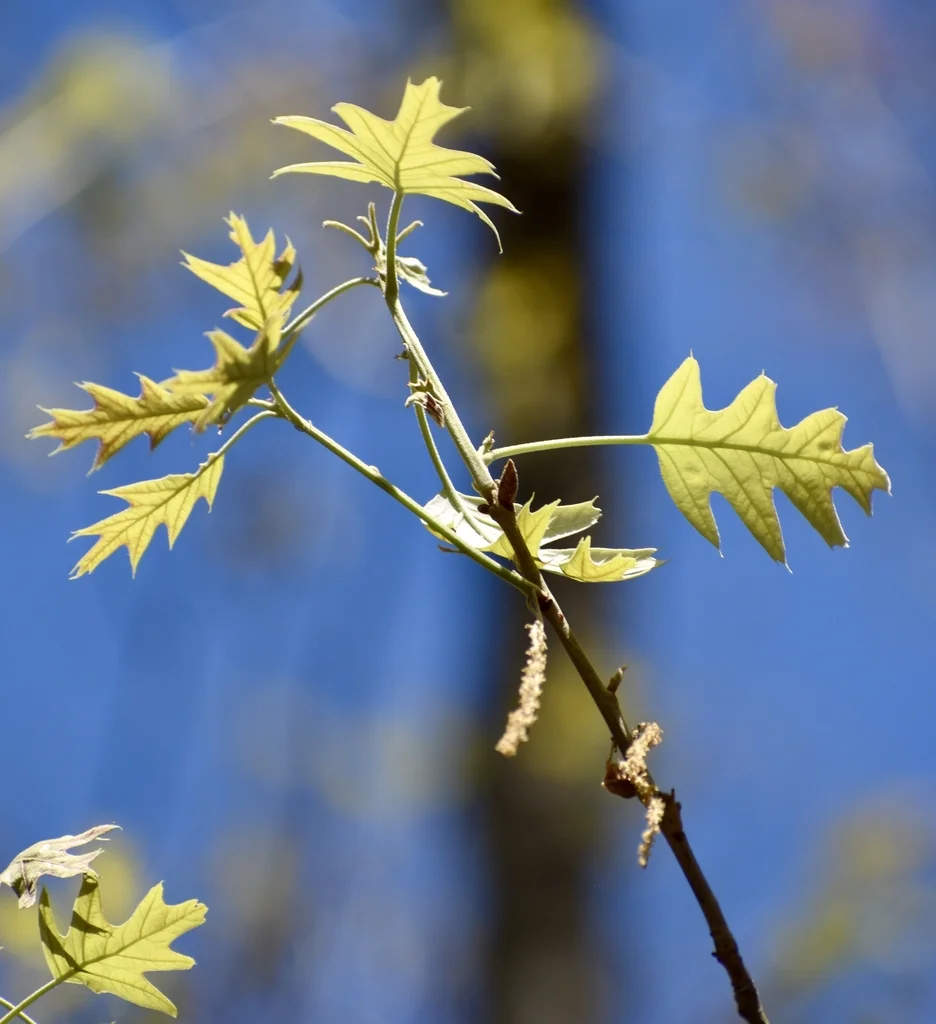
Alternate leaves usually have five to seven bristle-tipped lobes with deep, rounded sinuses between them. Pin oak belongs to the red oak group; compare several leaves and other features with similar oaks.
Pin oak · Quercus palustris
Follow one branch. Find a clear direction within a complicated day.
01 · Meet the tree
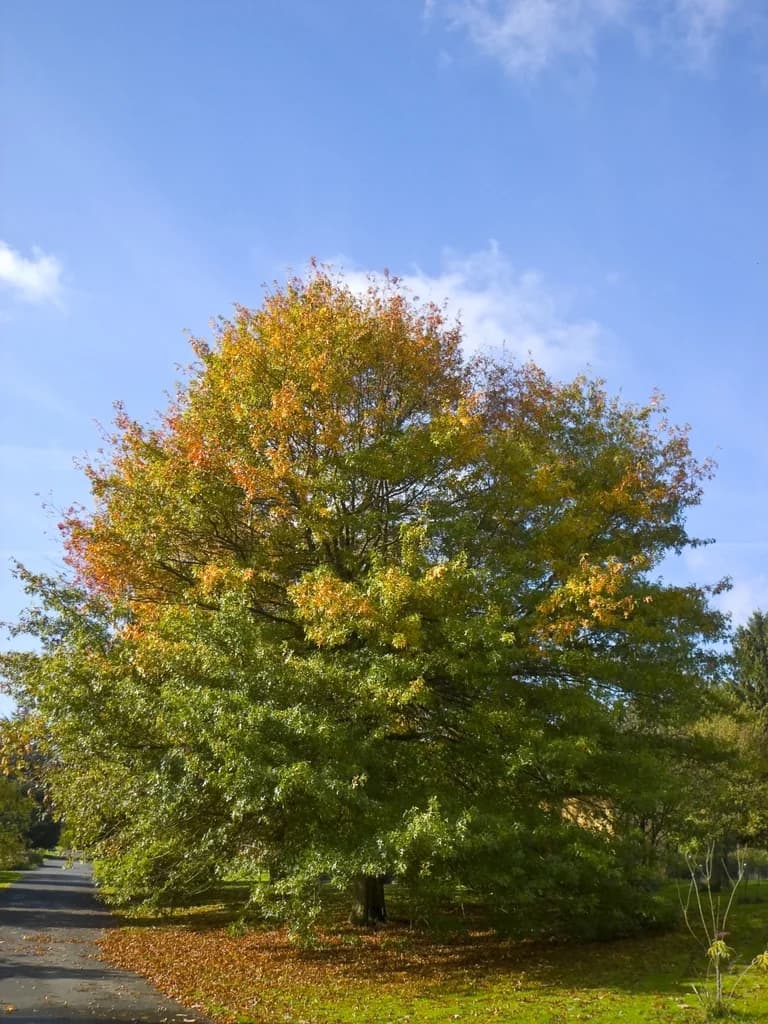
A pin oak's branching can offer a distinct pattern to observe: lower branches often descend, middle branches extend outward, and upper branches rise. Meet this particular tree before turning its form into a lesson.
Alternate leaves usually have five to seven bristle-tipped lobes with deep, rounded sinuses between them. Pin oak belongs to the red oak group; compare several leaves and other features with similar oaks.
A young crown is often pyramidal, with descending lower branches. Rounded acorns have shallow cups. Branch shape changes with age, damage, and pruning, so do not identify from silhouette alone.
Native to northeastern and north-central North America, pin oak often grows on moist, acidic sites and is planted in parks and streets. Observe from an established path; wet ground need not be entered.
Compare several features, and notice how age and season change their appearance. These photographs are starting points for observation; leave living leaves, needles, cones, and bark attached.
Spring brings catkins and unfolding leaves. Summer shows the deeply cut foliage and developing acorns. Autumn color can be bronze or red; some brown leaves persist into winter, especially on younger trees. In winter, notice the branching without expecting every tree to have a textbook outline.
Botanical reference: NC State Extension’s pin oak profile. This is a starting point for observation, not a complete identification key.
02 · Energy & character
Three qualities to contemplate beside the tree. Begin with what you can observe, then see what meaning emerges for you.
These tree-specific associations are new contemplative interpretations for the digital school. “Energy” here describes felt experience and symbolism; it is not a measured healing field or a promise of a particular effect.
Branches extend in several directions from a shared trunk.
Let the arrangement prompt a look at how parts of your day fit together. A useful structure can support attention without filling every space.
What arrangement would make your next step easier?
One branch is easier to follow than the entire crown at once.
Choose a manageable detail and return to it gently. You can include the larger scene again when ready.
Which small part deserves attention now?
Spaces between leaf lobes make their edges distinct.
Use a visible boundary as a prompt to describe an intention plainly. Clarity can be a small decision rather than a complete plan.
What can you name in one sentence?
03 · Practice with this tree · About 5 minutes
An original five-minute observation practice for finding structure and a manageable focus.
Open outdoor practice →Sit or stand with your usual supports on stable, permitted ground. Stay clear of damaged limbs and falling acorns. Choose a branch you can see without craning your neck.
Follow the branch with your eyes from its junction toward one small twig. Let your breathing continue naturally. If the view is crowded, choose a shorter section.
Include one opening beside the branch. Allow both the line and the space to be visible. Return gently when your attention wanders.
Bring a task to mind and name its next small action. Leave room around that action for ordinary needs. Widen your attention to the tree before finishing.
Spend about five minutes, or less if that suits you. Keep your device available when needed. No touching, collecting, controlled breathing, or tree-supported movement is required; leave the tree and its surroundings undisturbed.
04 · Roots in the book
The book teaches attention and learning from trees. This page adds a species-specific encounter; it does not claim that the original book assigned these three energies to pin oak.
Chapter 3 introduces three pathways and choosing an appropriate setting.
Read the chapter companionOriginal: printed pp. 13–17Chapter 4 encourages a sustainable beginning with five or ten minutes.
Read the chapter companionOriginal: printed p. 28One-pointed focus, discernment, and balance and optimization connect this new practice with Chapter 6’s invitations to learn from trees.
Explore Wisdom and WonderOriginal: Chapter 6, printed pp. 96–12405 · Notice for yourself
Reflect quietly or write a sentence in your own notebook. On another visit, look at the same detail again. Your experience may fit these themes, suggest something different, or simply be a few minutes of looking.