Bark and comparison
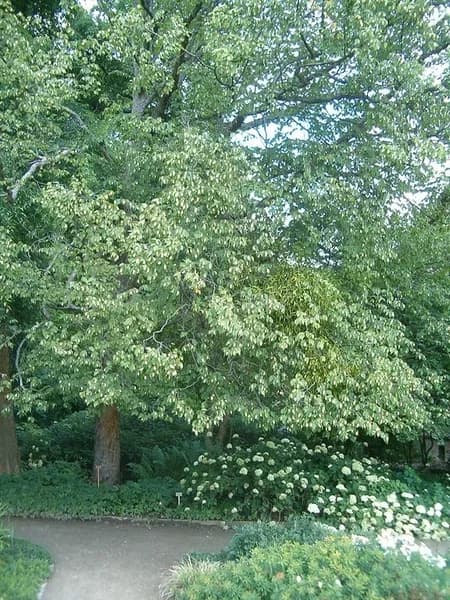
Mature hophornbeam has gray-brown bark broken into narrow, loose scales. American hornbeam (Carpinus caroliniana) instead has a smooth, fluted, muscular-looking trunk. Both are sometimes called ironwood; compare several features.
American hophornbeam · Ostrya virginiana
Notice a small tree's presence. Find a pace you can return to.
01 · Meet the tree
You can meet this tree without searching for a spectacular specimen. Begin with one visible detail and allow an ordinary encounter to hold your attention.
Mature hophornbeam has gray-brown bark broken into narrow, loose scales. American hornbeam (Carpinus caroliniana) instead has a smooth, fluted, muscular-looking trunk. Both are sometimes called ironwood; compare several features.
Alternate, simple leaves have doubly toothed edges. Clusters of inflated, papery sacs enclose small nutlets and resemble hops. American hornbeam has leafy, three-lobed fruit bracts instead.
This slow-growing member of the birch family occurs in eastern North American woods, including dry slopes and well-drained sites. It often grows beneath larger trees.
Compare several features, and notice how age and season change their appearance. These photographs are starting points for observation; leave living leaves, needles, cones, and bark attached.
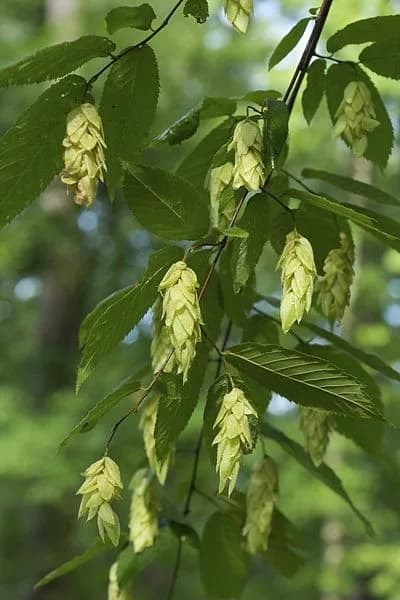
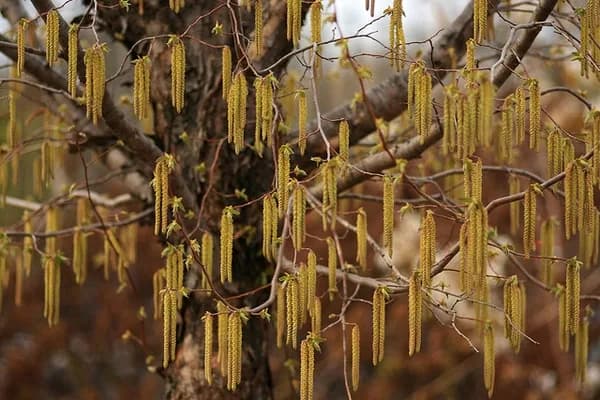
Look for hanging male catkins in winter and spring, leafy crowns in summer, and hop-like fruit clusters later in the year. Autumn leaves may turn yellow. Young bark can appear smoother than mature bark.
Botanical reference: NC State Extension’s american hophornbeam profile. This is a starting point for observation, not a complete identification key.
02 · Energy & character
Three qualities to contemplate beside the tree. Begin with what you can observe, then see what meaning emerges for you.
These tree-specific associations are new contemplative interpretations for the digital school. “Energy” here describes felt experience and symbolism; it is not a measured healing field or a promise of a particular effect.
A small trunk can be easy to pass without noticing.
Let this encounter bring an overlooked effort to mind. Continuing can take a modest, repeatable form.
What quiet effort deserves recognition?
A few minutes of looking reveal texture, but cannot show a season of growth.
Give an ongoing effort room to develop beyond today's view. Choose a timescale that fits the work.
What would a sustainable pace feel like?
Similar common names can belong to trees with different bark and fruit.
Let curiosity make your first impression more precise. Looking again is part of learning.
What detail changes your understanding?
03 · Practice with this tree · About 5 minutes
An original five-minute observation practice exploring quiet endurance and a manageable next step.
Open outdoor practice →Choose stable, permitted ground. Sit or stand with your usual supports, at a distance that makes looking comfortable. Let your breath follow its natural rhythm.
Rest your eyes on a patch of bark, a leaf edge, or a branch. Notice its shape without removing anything. A clear view from the path is enough.
When your attention moves elsewhere, return to that detail. Repeat a few times, allowing each return to be simple.
Think of one effort you want to continue. Choose a small action you could realistically repeat, then finish with another look at the tree.
Spend about five minutes, or less if that suits you. Keep your device available when needed. No touching, collecting, controlled breathing, or tree-supported movement is required; leave the tree and its surroundings undisturbed.
04 · Roots in the book
The book teaches attention and learning from trees. This page adds a species-specific encounter; it does not claim that the original book assigned these three energies to american hophornbeam.
Chapter 3 introduces three pathways and choosing an appropriate setting.
Read the chapter companionOriginal: printed pp. 13–17Chapter 4 encourages a sustainable beginning with five or ten minutes.
Read the chapter companionOriginal: printed p. 28Perseverance, presence, and acceptance connect this new practice with Chapter 6’s invitations to learn from trees.
Explore Wisdom and WonderOriginal: Chapter 6, printed pp. 96–12405 · Notice for yourself
Reflect quietly or write a sentence in your own notebook. On another visit, look at the same detail again. Your experience may fit these themes, suggest something different, or simply be a few minutes of looking.